Faculty of SHARIAH & ISLAMIC STUDIES
It is with profound gratitude to Allah Almighty that I extend a heartfelt welcome to all prospective students on behalf of the Faculty of Shariah & Islamic Studies and the Faculty of Languages at Dar-ul-Madina International University Islamabad—a Shariah-compliant institution committed to nurturing the next generation of Islamic scholars, Arabic linguists, and socially responsible citizens.
In response to the growing need for authentic, academically rigorous Islamic education, we are pleased to offer Bachelor level degree programs BS Islamic Studies and BS Arabic that integrate traditional Islamic sciences with contemporary educational methods. Our curriculum is rooted in the Qur’an, Sunnah, and classical scholarly traditions, while also addressing the intellectual, ethical, and spiritual needs of the modern world.
These programs are designed to empower students with the tools to serve the Ummah through knowledge, integrity, and leadership. We take pride in cultivating a campus environment where Islamic values are not only taught—but practiced—reflecting the true essence of a Shariah-compliant academic journey.
I invite you to become part of this noble mission. May your time with us be a source of personal growth, spiritual refinement, and meaningful contribution to society.
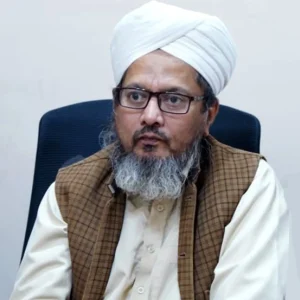
Faculty of
Prof. Dr. Mumtaz Ahmad Sadidi
Dean: Faculty of Shariah & Islamic Studies
The faculty of Shariah & Islamic Studies at DMIU solemnly envisages not only delivering valuable knowledge of Qur’an, Hadith, and Islamic Jurisprudence along with authentic research in the said fields but also infusing true Islamic spirit into the characters of the learners which as a global nation, we are lacking in at large.
The faculty of Shariah & Islamic Studies encompasses a variety of Islamic Sciences disciplines through the use of modern learning techniques. Currently, the faculty is comprised of the Department of Islamic Studies. Faculty members will attempt to communicate Islamic knowledge using effective pedagogical motivational approaches, innovative teaching strategies, and practical learning activities.
Following the vision and mission of DMIU the faculty members emphasize the students’ ethical grooming and character building based on the Islamic ethical system and moral ideals, which distinguishes the DMIU from other institutions. As a result, students will gain familiarity with both the theoretical and practical applications of Islamic principles.
Program Offered: BS Islamic Studies (4 Years/8 Semesters Program)
The Bachelor of Islamic Studies program at DMIU equips students with a broad understanding of Islam’s disciplines. This degree will assist anyone interested in gaining a better understanding of Islam, whether for job advancement or personal interest. Developed in response to a rising need in Pakistan for an understanding of the Islamic faith, this degree provides an Islamic education that combines the skills and qualifications of a university degree with a strong emphasis on traditional Islamic studies.
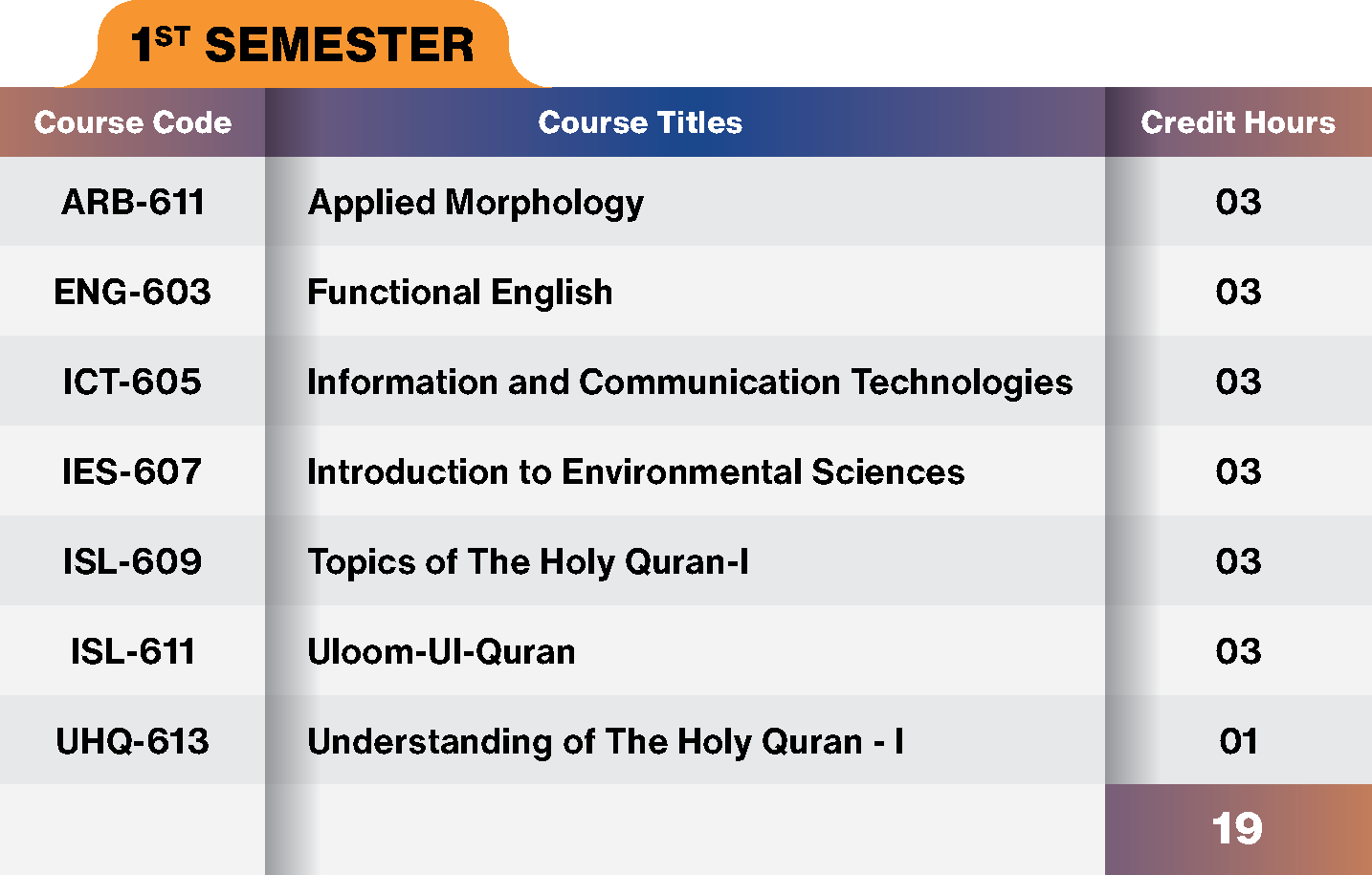
1st Semester
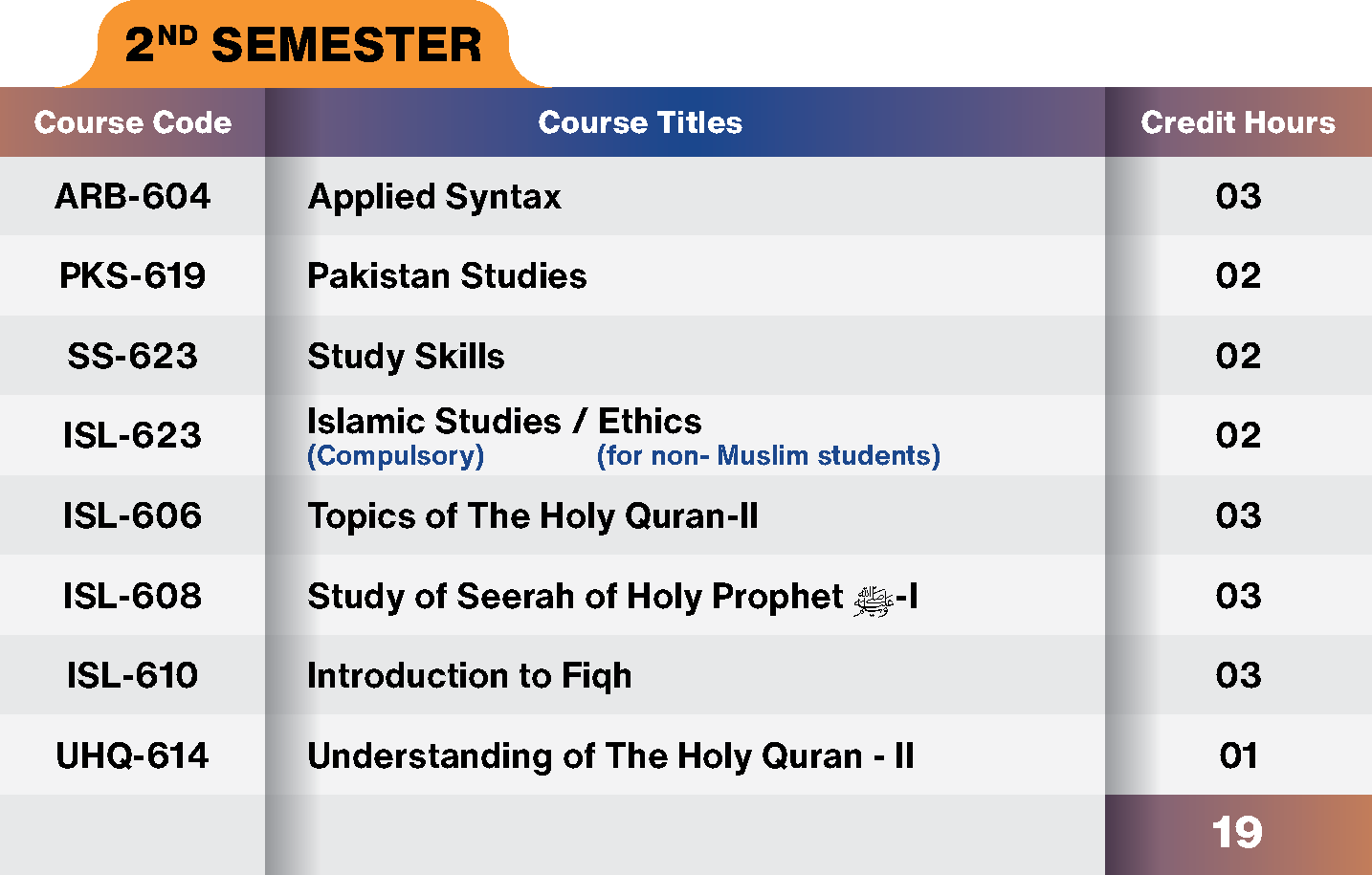
2nd Semester
3rd Semester
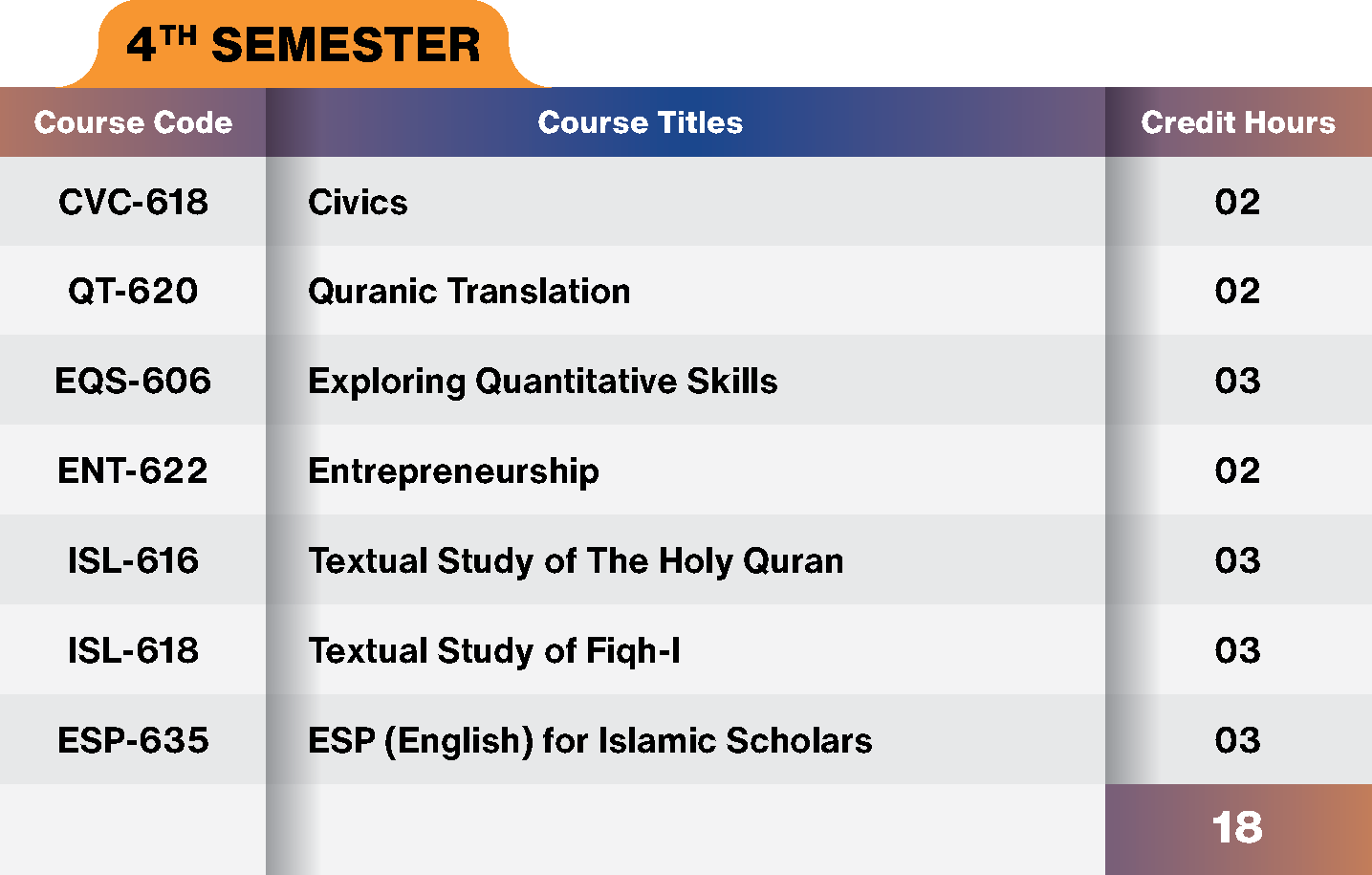
4th Semester
Summer Semester
The Semester will be offered only for ADA and ADB students.
Students will complete a three-credit-hour field experience during the vacation.
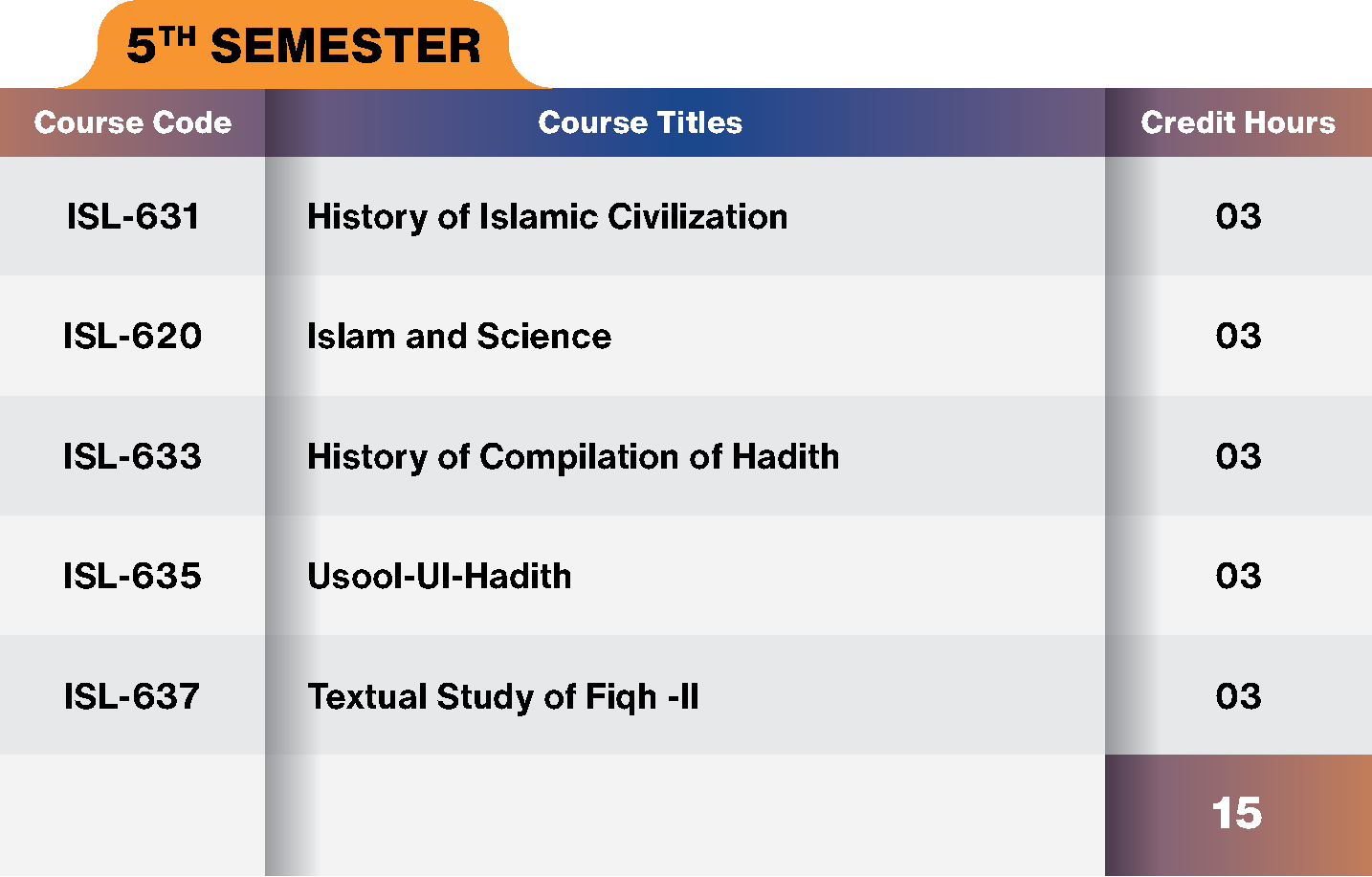
5th Semester
6th Semester
7th Semester
8th Semester
List of General Education Courses and their allocation in the various semesters
| General Education Cluster | Courses | Subject Name | Credit Hours | Semester |
|---|---|---|---|---|
| Functional English** | 1 | Functional English | 03 | 1 |
| Applications of Information and Communication Technologies (ICT)** | 1 | Information and Communication Technologies (ICT) | 03 | 1 |
| Natural Sciences* | 1 | Introduction to Environmental Sciences | 03 | 1 |
| Ideology and constitution of Pakistan/Pakistan Studies** | 1 | Pakistan Studies | 02 | 2 |
| Social Sciences* | 1 | Study Skills | 02 | 2 |
| Islamic Studies** (OR) Religious Education/Ethics in lieu of Islamic Studies only for non-Muslim students | 1 | Islamic Studies (Compulsory)/Ethics (for non-Muslim students) | 02 | 2 |
| Expository Writing** | 1 | Introduction to Expository Writing | 03 | 3 |
| Quantitative Reasoning** | 2 | Tools for Quantitative Reasoning | 03 | 3 |
| Exploring Quantitative Skills | 03 | 4 | ||
| Arts and Humanities * | 1 | Quranic Translation | 02 | 4 |
| Civics and Community Engagement** | 1 | Civics | 02 | 4 |
| Entrepreneurship** | 1 | Entrepreneurship | 02 | 4 |
| Total | 12 | 30 |